Followers

Tuesday, 18 September 2012

A memoir on the evolution of India’s socio-politics and economic policies from the pre-colonial to the mid-nineties


(Book review on THE IDEA OF INDIA by Sunil Khilnani)
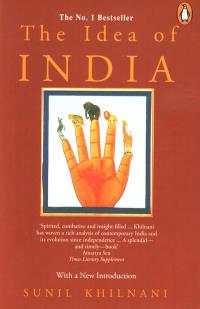
The book is a vivid description of the socio-political-economic order of India from the pre-colonial era till around 50 years after independence (around 1996) – the year Sri H D Deve Gowda, assumes the Prime Ministerial responsibilities of this great nation. While traveling through time, the author takes the readers through a celestial journey in the most descriptive, yet lucid manner, spread across 4 chapters – Democracy, Temples of the Future, Cities and Who is an Indian? In every chapter, he leaves behind a lot for the readers to ponder upon and to debate on the current (mid-nineties) socio-political environment.
The opening chapter on Democracy could not have been a better description of the country’s struggles to come to terms to the concept of democracy, after centuries of colonial oppression. As the author himself notes – “Few states created after the end of European empire have been able to maintain democratic routines; and India’s own past, as well as the contingencies of its unity, prepared it very poorly for democracy. Huge, impoverished, crowded with cultural and religious distinctions, with a hierarchical social order most deliberately designed to resist the idea of political equality, India had little prospective reason to expect it could operate as a democracy.” But, this concept of democracy, which the author defines as – “a type of government, a political regime of laws and institutions,” had “penetrated the Indian political imagination and has begun to corrode the authority of the social order and of a paternalist state.” What follows next is a frank description of the evolution of democratic systems in the nation through the layered social structures of varnas & jatis (Brahmins, Kshatriyas, Vaishyas and Sudras), explaining how economic and social balances were maintained in the days of the yore and finally raising a question – “Did British rule ruthlessly fracture the patterns of Indian society, or was it compelled to adapt to native styles, and merely preside in glorified manner over the more subterranean movements of India’s history?” This is where, the author introduces the Indian National Congress and its gradual evolution from “a stiff debating club that met annually during the Christmas vacation” to what Nehru once commented it as, “the mirror of the Nation.” The author then goes on to give an account of the role of Congress under Gandhi and Nehru during the freedom struggle and moves on to define the phase between 1947 till Nehru’s death (in 1964) as “… unsurpassed importance, during which the state stabilized, became a developmental agency and aspired to penetrate all areas of the society’s life, and showed that it could be subject to democratic procedures.” The author further illustrates the various political and economic changes that followed hereafter, from Indira Gandhi’s rule to Emergency to her assassination to communal tensions during the Babri Masjid demolition and the resurgence of Hindu nationalists. He finally ends this chapter by stating, “Conflict is a part of what Democracy is: a raw, exciting, necessary and in the end ultimately disappointing form of politics, that encourages people to make for themselves that most intimate of choices – to decide who they are and how they wish to be recognized, and to refuse to be ruled by those who deny them recognition.”

 In the next Chapter, Temples of the Future, the author describes how in the mid-50s onwards, a new and resurgent India tried to cope with the economic and commercial requirements by investing heavily in various infrastructure projects – starting from the Bhakra Nangal Dam in Punjab to building a new capital in Chandigarh (by Le Corbusier) to the gigantic steel plants in Durgapur, Bokaro and Bhilai (aided by the British, Germans and Russians) – “embodied the vision of modernity to which India had committed itself.” This is where the author comes down heavily on the developmental agenda of the newly elected Governments in the early phase of post Independent India by stating, “the economy created in the name of the intellectual blueprint of the 1950s, state-directed and regulated, founded on heavy industry and isolated from international competition, has not delivered its promises.” He goes on to critically dissect what went wrong through the first 50 years in post independent India and explains, “Nehru’s economic design was unquestionably more coherent than any of its Indian rivals in the 1950s. But it had to be built in real and particular circumstances, and inevitably intentions did not match outcomes.” The difficulties, he points out, “were rooted in the land: a very unequal distribution of land-ownership, defended by a powerful social order and very low levels of productivity.” Khilnani raises the question why, even with the Congress party ruling most of the states until 1957, economic reforms could not be administered. He finds out, “…Congress had never been a strongly ideological party… it was a broad political coalition, itself dependent on what some have described as ‘India’s ruling social coalition’ of commercial and industrial capitalists, rural landlords and the bureaucratic and managerial elite (in later decades, newly enriched farmers and unionized public sector workers would clamber aboard this coalition raft).” An interesting account on the failure of Indian planning and Planning Commission follows with the latter gradually “toppled from its throne” shifting the economic decision-making powers to the Finance Ministry in the late 1960s, while the commission continues to exist as “a sophisticated accounts office and a retirement home for the socially benevolent.”

In the third chapter, the author pens down the sentiments of Nehru behind building metropolises with a vision to “not only make them symbols of a new sovereignty but an effective engine to drive India into the modern world.” Khilnani gives an elaborate description of how the port cities of Bombay, Calcutta and Madras came into existence during the colonial regime and later, in the post independence era, newer cities were built to relive Nehru’s vision. The author went on to describe the changing skyline over the next couple of decades and how India’s modern cities competed for global visibility and recognition.

In the ultimate chapter of this book, Khilnani raises an interesting question – who is an Indian? At the time of independence, the country had a “multitude of Hindu castes and outcastes, Muslims, Sikhs, Christians, Jains, Buddhists, Parsis and tribes; speakers of more than dozen major languages and thousands of dialects; myriad ethnic and communal communities” – how to unite such a diverse group as citizens of a new, free and democratic republic under a common code of law? He sets the tone of the chapter by recounting the horror of the Ayodha communal riots (read: carnage) and linked it with BJP’s electoral manifestoes, which saw this as the forging of ‘one nation, one people, one culture.’ The author further depicts how the various communal, ethnic or social movements, for the demand of an independent Bodoland, Khalistan or Tamil Eelam, have further dented India’s image as a nation united in its diversity. He concludes by explaining, “The contest is over economic opportunities and about cultural recognition. It is a contest for ownership of the state.”

Overall, the book finds close semblance to Nirad C Chowdhury or VS Naipul’s historical delineation of facts, while it is enriched with political economic detailings of Amartya Sen or Dreze and the socio-political perspectives of Pawan Verma.

Saturday, 21 July 2012

Understanding the psychology of mob behaviour: A case on Maruti mob attack (July 2012)


Burnt and vandalised cars left in the 
Manesar plant of Maruti

 It was a black day for the industrial community in India, the day when a young HR personnel at the rank of a GM suffocated to death in his office due to a fire put on by workers, who had no respect for law or order, least to say any worth for human life. Media reports also stated that the same person was first beaten up by the workers with steel rods and blunt auto parts, which resulted in multiple fractures in both legs, thereby making the person an easy prey to the engulfing inferno. Left to perish, with no help in sight, he finally succumbed to his injuries and was reported death by suffocation along with 100% burnt.

This was no one-off incident, which took place in a factory in the depth of rural India – away from the civilized urban world. Unfortunately, this incident took place in the very heart of civilization within 50 kms from Delhi NCR in Maruti Suzuki’s plant in Manesar – one of the fastest growing industrial townships in North India. And, this GM was not the only prey in this mob-frenzy that broke out that day, in that doomed Maruti plant. Some 40 other executives, many of them at the ranks of GM and some at the ranks of VP were predated upon by hordes of workers, with little knowledge of what they were up to.

The above-cited incident reflects on to an action, which can be commonly termed as mob-attack. Let’s first try to understand the meaning of the term ‘mob.’ A mob is a crowd of people with no defined objective, although the group is big, most-often leader-less and highly emotionally charged. What starts off as a systematic protest, in the above case, by a trade union, actually moves on to become a disoriented, mass movement, with a goal to cause unwanted destruction of life and property.  

According to social psychologists, there are various factors, which come into play when the term mob mentality or mob behaviour is referred to. Two of the main factors are the greater anonymity that exists within a group and the distribution of responsibility for the group's actions. These factors sometimes make a person believe that they can act a certain way within a group and not have the same consequences that the same actions would have if he or she acted alone. For example, if a person is in a group that is vandalizing a building, he or she might believe that there is less of a chance of getting caught than if he or she was acting alone, because it might be difficult to identify every person who was involved. He or she might also feel less guilt because other people also vandalized the property.
Another factor in mob mentality is the sense of confusion or even panic that can exist in a large group. An example of this can be seen when people in crowds suddenly begin rushing in one direction. Although many people in the group might not know why this is happening, they see the urgency in the group and begin rushing in that direction, too. In extreme cases, the urgency and panic increases, creating a sort of crowd hysteria, and some people might even get trampled as a great number of people try to move in the same direction as quickly as possible. Even for something as seemingly innocent as a department store sale, a mob mentality might be evident as dozens of shoppers rush toward the sale items, push each other out of the way and fight over the items.

According to Floyd Allport (1924), noted social psychologist, "there is no psychology of groups which is not essentially and entirely a psychology of individuals". When it come to collective action, Allport declared, still more famously: "the individual in the crowd behaves just as he would behave alone only more so". Crowd members lose their unique and idiosyncratic identities and behave in terms of a primitive animal substrate.

Crowd members who take part in violent action or action against the social order might be expected to have violent or anti-social personalities - or, at the very least, to be under- socialised or marginal to society. As the official US Riot Commission report of 1968 acknowledged, the most prevalent view was that "rioters were criminal types, overactive social deviants or riff-raff - recent migrants, members of an uneducated underclass - alienated from the society." Drawing analogy to the incident that took place at Maruti with the commentaries shared above, it can be very well justified that the vandalism that took place there was ignited by the demands of the working class – a demand to reinstate a suspended worker – which was not to be accepted by the management. Although the workers were not marginalized in terms of their numbers – the media had quoted around 2000 workers – but their sense of feeling marginalized was evoked by their social class order (working class). When the long negotiations in the plant failed to get any peaceful resolutions, the workers erupted in the most antagonistic manner.

Most mob attacks or acts of vandalisms are caused by
mindless, brain-dead individuals who have no concern
for life of property
As a common man, one can only wish to stay away from such mob-attacks, but one never knows when he gets dragged into one. The incident that took place in Maruti’s plant at Manesar is no doubt one of the most horrendous incidents to have happened in my lifetime. My heartfelt sympathies go out to the family of the bereaved as well as to all the workers, for whom the future employment in the plant seems bleak. One miscalculated, misjudged and mistimed step taken by an immature group of brain-dead people has lead to undesirable consequences – most often turning sour, rather than getting any sweet results out of such unwanted actions.


Tuesday, 21 February 2012

Myopism: The new religion of the short-sighted generation

The Merriam-Webster dictionary defines myopic as an adjective used for a person who lacks foresight or discernment and takes a narrow view of something. Unfortunately, they do not have any definition for Myopism - in fact, no other dictionary online or offline even has the word archived with them. But, going by the definition of a myopic, we may go on to define myopism as a mass followership of the act of myopia, wherein every person in this congregation necessarily believe in developing and maintaining a narrow view of anything around them.And believe me, this is a national phenomena today in India. Youngsters and grownups, teenagers to executives have all been swept off their feet with the intense gratification that they derive out of Myopism.

So what exactly do we understand by Myopism and how can one get baptised in this new religion? It's simple. You don't need any priest, no temple or house of worship, no preachers or religious discourses, you just need yourself! Yes, you read it right. This is a religion which has a mass following, with no one knowing who all are there in it - you just know that you are a part of it. Sounds interesting? Read on. To be a follower of Myopism, as most others are today, you need to shrug off everything around you, for you are the chosen one - you are the most powerful being on earth - the masthead of your own self. You may be guessing how come everything involving you can become a religion! Don't bother about it. You just need to know that it is about you and only you. If you have not got it till now, then let me put it in bold letters - Myopism is a belief, wherein you stop thinking about anything beyond yourself and you tend to unlearn everything related to SELFLESSNESS. Now you seem to get it right. You grow even more selfish day by day and evoke in you the chasm of greed, dishonesty and fraudulence.

Myopism has actually taken the country by storm. Everyone across every age group, every profession, every gender, caste, creed, are blindly following this religion. It seems to be the new age mantra to salvation or moksha. Forget about others, in some cases, these self possessed myopics are all eager to lay their own life on the altar of sacrifice, to appease the cravings of the capitalistic demi-gods. Okay, let me make it sound lighter. What is our intent to live? To lead a life which covers our basic necessities and then to look forward to live longer for ownself and others (read: family members and next to kin). But, why is it that, we have lost the foresight to live? Take a look around and pick up any urban teenager. You get to see him spending hours on various electronic gadgets - be it the cell-phone, the tablet or any other gizmo. Of course, life has been made easier, but also shorter. Why dont you guys see the writing on the walls? Our media goes on to glorifying terms like finger fatigue, as if it is some short ailment while missing the suicidal steps taken by these youngsters by exposing themselves to hours of electronic devices, thereby letting pass various electro-magnetic radiations for hours through different parts of their body. What looks cool today to these myopics, is actually going to be uncool in days to come, when they will lie on the pyre - lying cold from carcinoma of the brain, the testicles and other parts of the body. (I may sound very harsh and raw here, but is there any other means to put this message through the plastered brains of these young adults - glorified as tomorrow's change agents?)

Myopism is also very popular with our politicians. Be it Mamata in Bengal, Jayalalitha in Tamil Nadu, Maya in UP (sorry to miss out the male folks - no female bashing intended!) or our most beloved Soniaji and Manmohanji in the centre. To look a distance, they probably would request for the latest high resolution army binoculars but will still not open up their mind's eyes to think of how to be popular and retain their vote banks for years to come. Oh no! I am the CM of state A or state B and I am only going to see that I, with my team of 'yes madam or yes sir' cabinet return back in the next 5 years. And why not? It is the most lucrative means of becoming a Mukesh Ambani, without even working hours in setting up petrochemical plants or offshore oil drilling projects. I need to dictate terms with the babus and the industrialists and the flow of Bapu (the Indian currency notes) remain intact in shades of grey to black. Why else, would our fiesty politicians, who when they are in the opposition, show every reason to fight for the cause of the common man, change their ploy the moment they sniff the thrones of power? Why else should one invest lacs to fill the  oesophagus of the hungry millions with cocktail of the deadly methyl alcohol, when sacks of rice and pulses go rotting in the state warehouses? We all seem to know the answers, but are blinded by our faiths of Myopism to actually question what is wrong or unjust.

And let's not forget our industrialists. They are supposed to be the drivers of the Indian economy, but when they start driving people crazy with their short sighted vision to maximize their wealth at the cost of the investors, the employees and the final customers, it is once again the tainted babus and ministers, who come to their rescue using all the forces against a public uproar. So an effective tool like the RTI or a PIL falls flat with the power of the trinity - the babu, the minister and the corporate bigwig! In today's India, there are many a success stories of entrepreneurial growth. But, I wish I had the power and the authority to subject each of these entrepreneurs to a test using lie-detectors (these myopics do not even have the faith to say the truth by putting their hands on the holy book, and hence, some technology is required to get the truth out of them) and question their sincerity, their commitment and their truthfulness in areas covering employee satisfaction, customer satisfaction, tax and financial transparency and corporate governance. And lo, we would have seen a pandora's box opening. These short sighted, insensitive industrialists, who have always maintained the charm of the prince in any public gathering are nothing less than creepy goons in their private chambers - looking at means to maximize their wealth and power.

Long live Myopism! Long live our shortsighted vices.